-
May 03, 2013
Catharine Clark Gallery Now Open By Appointment Only

Moving out
Catharine Clark Gallery will move to 248 Utah Street in the Summer of 2013, to a space designed by Los Angeles based Tim Campbell. This new location is within the neighborhood of the San Francisco Design Center and Showplace Square. Catharine Clark Gallery will add to the emerging cultural character of the Potrero Hill, which currently includes California College of the Arts (CCA), the CCA Wattis Institute for Contemporary Arts, and the Museum of Craft and Design.
Catharine Clark Gallery will be closed to the public from April 21 – June 30, but open for appointment in San Francisco during this time. The gallery’s grand opening on Utah Street will be announced in July 2013. Catharine Clark and staff have several extra-mural programs planned for April, May, and June. For more information about programming or artists, please contact gallery staff: 415.399.1439 or 415.519.1439, or visit: www.cclarkgallery.com
Alex Case and Eric Lendll packing everything up!
Stephanie Smith and Ariel Rosen moving our flat files out of the gallery!
-
May 01, 2013
EntryThingy Blog and Podcast
Art of the Call Podcast: Catharine Clark, Catharine Clark Gallery in San Francisco, California
Here's another Art of the Call video podcast where we ask directors, artists and curators to talk about the call for entry process.
In this video, Catharine talks about:
- Emerging vs professional artists
- Juried shows
- Legitimate space for art
- Selecting art for a gallery
- Choose and be chosen
- What's important for artists
-
April 20, 2013
Closing Reception
Saturday, April 20 | 3-6pmTravis Somerville: A Great Cloud of Witnesses
Paul Rucker: Sounds Like... and Proliferation
Media Room: Question Bridge: Black Males
Chris Johnson, Hank Willis Thomas, Bayeté Ross Smith, and Kamal Sinclair
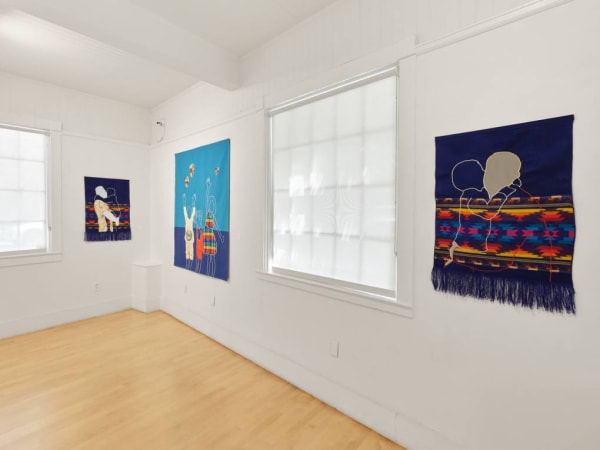
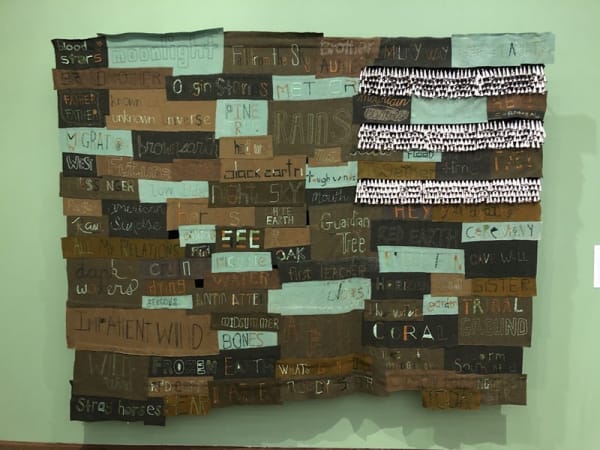
Installation view of Travis Somerville's "A Great Cloud of Witnesses"
Please join Catharine Clark Gallery to celebrate the closing of our final exhibition at 150 Minna Street! The afternoon will feature a cello performance by exhibiting artist Paul Rucker and catalogue sale. Thank you for your continued support, we look forward to seeing you Saturday!

Paul Rucker. Still from Water from the series Sounds Like... 2010. Single-channel video, digital print. Edition of 15. 24 x 36 inches unframed
"Sonic Interpretation" Performance by Paul Rucker
Saturday, April 20 | 4:30pmWith cello and electronics, Paul Rucker will perform live at Catharine Clark Gallery, inspired by the artwork on view.
In light of Travis Somerville's associated "Meet the Artist" event at the Crocker Art Museum, Paul Rucker will begin his concert at 4:30pm, following an introduction to his artwork on view at 4:15pm.
Meet the Artist: Travis Somerville
Saturday, April 20 | 1 - 3pm
Crocker Art Museum____________________________________________________________
Catharine Clark Gallery will be open by appointment April 21 – June 30 in San Francisco. The grand opening will be in July at 248 Utah Street. Catharine Clark and staff have several extra-mural programs planned for April, May, and June.
Upcoming at CCG NY:
Nina Katchadourian: Sorted Books Monograph Release
May 10 - 12Upcoming Art Fair:
artMRKT San Francisco 2013
May 16 - 19For more information about programming or artists, please contact gallery staff: 415.399.1439 or 415.519.1439, or visit: www.cclarkgallery.com.
-
April 12, 2013
Catharine Clark Gallery at SEVEN April 11-14!
Coinciding with the Dallas Art Fair, Catharine Clark Gallery is participating in SEVEN at Dallas Contemporary, showing work by Walter Robinson, and "Winter in America" by Kambui Olujimi and Hank Willis Thomas in the video room.
"Tower" by Walter Robinson
Pilot by Walter Robinson
Walter Robinson and Jaime Brunson at SEVEN, in front of two "Eye Chart" works
Video Room installation from SEVEN, featuring "Winter in America" by Kambui Olujimi and Hank Willis Thomas.
Installation of "Winter in America" by Kambui Olujimi and Hank Willis Thomas
-
March 27, 2013
Making Art Out of Earthquakes
Berkeley's Ken Goldberg explores how to help people understand the physical realities of a geologically active world.GEOFF MANAUGH & NICOLA TWILLEY
MAR 25 2013, 3:22 PM ET
The Hayward Fault runs through the center of the UC Berkeley campus, famously splitting the university's football stadium in half from end to end. It has, according to the 2008 Uniform California Earthquake Rupture Forecast, a thirty-one percent probability of rupturing in a magnitude 6.7 or greater earthquake within the next thirty years, making it the likeliest site for the next big California quake.
Nonetheless, for the majority of East Bay residents, the fault is out of sight and out of mind--for example, five out of six Californian homeowners have no earthquake insurance.

The Hayward Fault trace superimposed onto a map of the University of California, Berkeley, campus, as seen in theUSGS Hayward Fault Virtual Tour
Meanwhile, three-quarters of a mile north of Memorial Stadium, and just a few hundred yards west of the fault trace, is the office of Ken Goldberg, Professor of Industrial Engineering and Operations Research at Berkeley.Goldberg's extensive list of current projects includes an NIH-funded research initiative into 3D motion planning to help steer flexible needles through soft tissue and the African Robotics Network, which he launched in 2012 with a Ten-Dollar Robot design challenge.

A robot from the "10 Dollar Robot" Design Challenge organized by the African Robotics Network
Alongside developing new algorithms for robotic automation and robot-human collaboration, Goldberg is also a practicing artist whose most recent work, Bloom, is "an Internet-based earthwork" that aims to make the low-level, day-to-day shifts and grumbles of the Hayward Fault visible as a dynamic, aesthetic force.
Screenshot of Bloom, 2013, by Ken Goldberg, Sanjay Krishnan, Fernanda Viégas, and Martin WattenbergVenue stopped by Goldberg's office to speak with him about Bloomand the challenge of translating invisible seismic forces into immersive artworks.
Our conversation ranged from color-field art and improvisational ballet to the Internet's value as a vehicle for re-imagining the relationship between sensing and physical reality. The edited transcript appears below.
• • •
Nicola Twilley: When did you start working with seismic readings in an artistic context, and why?
Ken Goldberg: Well, I had just finished grad school, I had started teaching at USC in the Computer Science department, and I was doing art installations on the side. And I was building robots.
I had just completed an installation for the university museum when I stumbled onto this, at the time, brand new thing called the World Wide Web. My students showed me this thing and I realized: this is the answer! The Web meant that I didn't have to schlep a whole bunch of stuff to a museum and fight with all their constraints and make something that, in the end, only 150 people would actually get out to see. Instead, I could put something together in my lab and make it accessible to the world. That's why we--I worked with a team--started developing web-based installations.

The Telegarden, 1995-2004, networked art installation at Ars Electronica Museum, Austria. Co-directors: Ken Goldberg and Joseph Santarromana Project team: George Bekey, Steven Gentner, Rosemary Morris Carl Sutter, Jeff Wiegley, Erich Berger. (Robert Wedemeyer)
We actually built the first robot on the Internet, as an art installation. It got a lot of attention--tens of thousands of people were coming to that. Then we did a second version called The Telegarden, which is still the project I'm probably best known for. It was a garden that anyone online could plant and water and tend, using an industrial robotic arm, and it was online for nine years. I actually just found out that there's a band called Robots in the Garden, which is exciting.What was really interesting to me about The Telegarden was this idea of connecting the physical world, the natural world, and the social world through the Internet. I was interested in the questions that come up when the Internet gives you access not just to JSTOR libraries and to digital information, but also to things that are live and dynamic and organic in some way.
That really drove my thinking, and my colleagues and I began to do a lot of research in that area. I registered some patents and won a couple of National Science Foundation awards, formed something called theTechnical Committee on Networked Robots, and wrote a lot of papers. From the research side of it, there are a lot of interesting questions, but, from the art side, it also led to a series of projects that look at how such systems were being perceived, and how they were shaping perception.
I worked with Hubert Dreyfus on a philosophical issue that we call "telepistemology," which is the question of: what is knowledge? What counts as objective distance? In other words, people were interacting with this garden remotely, and that raised the question of whether or not, and how, the garden was real, which is the fundamental question of epistemology.

The Telegarden, 1995-2004, networked art installation at Ars Electronica Museum, Austria. Co-directors: Ken Goldberg and Joseph Santarromana Project team: George Bekey, Steven Gentner, Rosemary Morris Carl Sutter, Jeff Wiegley, Erich Berger. (Robert Wedemeyer)
Epistemology has always been affected by technologies like the telescope and the microscope, things that have created a radical shift in how we sense physical reality. As we started thinking about this more, we became interested in how the Internet is causing an analogous shift, in terms of, hopefully, reinvigorating skepticism about what is real and what is an artifact of the viewing process. I edited a book on this for MIT Press that came out in 2000.In the middle of all that, then, I moved here and met someone from the seismology group. They agreed to give me access to this live data feed of movements on the Hayward Fault, a tectonic fault that cuts right through the center of Berkeley--in fact, right through the middle of campus, not far from here. I was really interested in this idea of connecting to something that was not just the contained environment of a garden, but something much more dynamic and naturally rooted and global.
I guess I should add, as well, that a big factor for me was when I moved up here and became intrigued by the total amnesia and denial that people here have about their seismic situation. I would ask people, "What do you have in your earthquake kit?" And they would reply, "What? What are you talking about?" Now, of course, twenty years later, I don't have an earthquake kit, either. [laughs]
Manaugh: I think that's quite a common scenario. When we first moved out to California, we bought several gallons of water, a few boxes of Clif Bars, extra flashlights, and even earthquake insurance, and the native Californians I knew here just looked at us like we were paranoid survivalists, hoarding ammunition for Doomsday.
Goldberg: It was that sort of reaction that got me thinking a lot about how people are not conscious of the fault, or about earthquakes, in general, and I began wondering how you could make that more visually present. Also, the old seismograph was an interesting visual metaphor for me. Everyone recognized that form, but I wanted to play with it. I thought we could make a live, web-based version, which you can actually still see online.
Twilley: What form did that take?
Goldberg: The very first version was just a simple trace across a black screen. It was called Memento Mori and it was meant to be super-minimalist. In fact, when I showed it to the seismologists, they said, "Oh, where's the grid? How can we quantify this without a scale?" I had to say, no, no, it's not about that. We're just showing a sense of this--a visible signal. We actually wanted people to make an analogy with a heart monitor.

Screenshot from Memento Mori, 1997-ongoing, Internet-based earthwork (Ken Goldberg in collaboration with Woj Matuskik and David Nachum)
What's also interesting is that the trace mutates quite a bit. You come in at different times of the day and the signal is very different. It's sort of like the weather. The fault has different moods. When there is an earthquake, people will see big swings of activity with rings, because it goes on for days and days afterward. In fact, when there's a big earthquake in Turkey, you can pick it up here. It strikes the earth and then a signal comes around at the speed of sound, and then it goes all the way around again, and you get these echoes for weeks. Very small echoes can go on for months. And, every time there is a tremor, we get a huge spike in traffic.
I also liked the idea of making a long form artwork, like Walter De Maria's Earth Room, online.
Manaugh: Like a seismic Long-Player?
Goldberg: Exactly.
Part of this, I think, is that as an engineer, I'm really intrigued by the challenge of how you make the system stay on. A lot of times we have robotic projects, but they work once or twice, and then that's it. I feel like that's deceiving, because people may see them, or watch a video, and then they take away a certain sense of what robotics is. You have to be careful, because it sets false expectations. The kind of robotics in which you really build a system that can stay online and also take the kind of abuse that happens over the Internet is quite a challenge. I'm very big on this issue of reliability and robustness.
In any case, we put the Memento Mori system online and, after a year or two, Randall Packer, a composer here, approached me and said, "What about adding an auditory component?"
The actual signal frequency is too low--it's inaudible. If you just attach a speaker to it, nothing comes out. What you want to do is use it to trigger sounds, so that, essentially, the signal becomes like a conductor's baton, triggering this orchestra of sounds. Through that process of sonification, you can create a very auditory experience that's still driven by the seismic signal.
Twilley: So you could be using the signal to trigger a laugh track if you wanted to?
Goldberg: Exactly--the sounds don't have to be notes. Packer did it with a lot of natural sounds, like waterfalls and lightning and thunder--things like that--so it was very earthly. But by no means does it have to be musical. In fact, that's where we are now with Bloom, which is my most recent project.
We renamed the new auditory version Mori. We got a commission to do a project in Tokyo, at the ICC. They actually gave us a good amount of funding, so we ramped up and built this whole seismic installation with an acoustic chamber that was about fifteen feet square and had extremely powerful subwoofers underneath the plywood floor.
The whole idea was that you could walk in and you could lie on the floor. We amplified the signal a lot, and there was this real sense of immersion, like you were essentially inside the earth. What was important is that it was live.
Obviously, you could do this prerecorded, but it was essential to us that this signal was coming directly from the earth in real-time.

Mori Seismic Installation, 1999-ongoing, Ken Goldberg, Randall Packer, Gregory Kuhn, and Wojciech Matusik. Photo taken at the Kitchen, New York City, April 2003. (Jared Charney)
That was started in 1999, and, as it traveled around Japan and then to the The Kitchen in New York, we got closer and closer to the one-hundredth anniversary of the 1906 earthquake. I got this idea that I wanted to do a performative version. I wanted to do it in a very big space where everybody could experience it together at the time of the one-hundredth anniversary.
About a year before the anniversary, by chance, I was seated at a table next to a dancer--actually, the dancer--from the ballet. She was the principal dancer at the San Francisco Ballet--Muriel Maffre. After a couple of drinks, I got the courage up to ask her, "Would you ever consider dancing to the sound of the earth?" Amazingly, she said yes.
So Muriel, who is just an astounding artist and performer, took this on as a project. The idea was quite radical--that she would take a live seismic signal and respond to it on stage. And it's improv, because you don't know what's going to happen. We worked together for about a year, and we convinced the ballet to actually perform it in the opera house. It was about a week before the actual anniversary, in the end. She performed it on stage and it was about three minutes long. She did a phenomenal job. It was just a beautiful thing.

Muriel Maffre performing Ballet Mori, image via Ken Goldberg.
Twilley: How did you connect the signal to her, on stage?Goldberg: We connected to the signal via the Internet, and we did the sonification right there on site, feeding it into their speaker system. She was just responding to the sound on stage.
What's so interesting about how the ballet works is that they do all these rehearsals and, then, when they actually set up for the performance, it all has to be done that same afternoon. There's no advance set up, because the space is in so much demand. You only have a few hours to get the whole thing tuned.
In this case, we were really cranking it--telling them to just turn up the volume. It was amazing to watch this old opera house, which actually was destroyed in the 1906 earthquake and then rebuilt, start to vibrate. That was actually a big concern--were light fittings and so on going to fall?

Ruins of City Hall and the Majestic Theater in San Francisco, following the 1906 earthquake.
Manaugh: That reminds me of the artist Mark Bain, who actually got permission to install a massive acoustic set-up in a condemned building in the Netherlands; it got so loud, and the bass frequencies he was using were so extreme, that the building risked collapse--which, of course, was the entire point of Bain's performance--but the organizers had to shut it down.Goldberg: The facilities guys actually said to me, "We don't want to drop the chandelier on people's heads! What if there's a spike in the earth's motion that would cause the sound levels to blow up?" I don't know if that's even feasible, but we put a clip on it so, if there was a sudden event, the system wouldn't be overwhelmed.
From there, I went on to do a limited series of the original Memento Mori piece that collectors could purchase. There was an artist's edition that would always be publicly available, but people who bought their own edition got their own version that they could label, and that included some private data. But, in the course of developing that, I started thinking, why does it have to be so grim? When I originally conceived it, I was really into the minimalist aesthetic. It was just black and white and about mortality. But I started thinking: why? It started seeming very dark.
So I started thinking about what else this signal could be used to generate, something that would be more visually stimulating and more engaging. That's what gave rise to my new project, Bloom. Bloom is meant, in some sense, to invoke something that's more natural and organic. It still references mortality, but in a much more positive way. Maybe it's because I'm getting a little older or something like that!

Screenshot of Bloom, 2013, by Ken Goldberg, Sanjay Krishnan, Fernanda Viégas, and Martin Wattenberg.
Bloom is basically the idea that all flesh is grass, and that we can look at natural plant growth and organic material as outgrowths of the Earth. The seismic signal is a representation and reminder of this organic substrate, so I thought: let's use it to trigger the growth of forms. I'm just going to play it for you. [launches beta version of Bloom]Manaugh: What are we actually seeing right now? What scale of seismic activity do these blooms represent?
Goldberg: What you're seeing right now is just normal variation. For example, when a big truck goes up Hearst Avenue, which is not far from the seismometer, there's a signal from that. And then, at any given time, there are actually lots of tremors going on around the world, so you're picking up all the echoes of those. It's actually really rich to try to do signal-processing in order to extract signals from the noise, because there are also resonant elements from, for example, the beating of the surf on the California coast.
There's actually a huge amount of information coming through here. What's interesting is that this display is so different to what earth scientists are used to looking at. They study plots and seismographs, and so on. We're actually going to have a meeting with them to talk about their perceptions of this and how they respond to it. My sense is that they probably won't find it that valuable, because there's no real scientific benefit to it--although it would be interesting to see if someone who really understands the signal could look at this thing for a while and actually start to read it.
For us, it's really more of an abstraction.
Screenshot of Bloom, 2013, by Ken Goldberg, Sanjay Krishnan, Fernanda Viégas, and Martin Wattenberg.Twilley: Can you explain how the blooms' particular colors and forms are generated?
Goldberg: The blooms are triggered from left to right, so there's still this idea of temporal progression, and they are triggered depending on whether the signal is switching. The relative size of each bloom is generated by the size of the signal change. The color choices come from a feed from Flickr--a search for flower images to pull up a data set that we can use to source the color variations.
I'm working with these two wonderful data visualization folks, Martin Wattenberg and Fernanda Viégas. They are amazing: Martin has a Math PhD from Berkeley and went off to work at IBM. He's done a huge number of these visualizations for data of all kinds--most famously, for baby name data. All of his interfaces are just fantastic and we've been friends for a long time. He then started working with someone I knew from MIT, Fernanda, who is a painter by training. The two of them started to do all these amazing projects with IBM, and they had their own lab, which they eventually took private. Then they got bought by Google, but Google seems to give them pretty free rein to do whatever they want. We started working on this about a year ago.

Mysteries: Afloat, 2000 (Kenneth Noland)
I should also explain the reference to Kenneth Noland. I'll confess to you--I didn't really know his work when I began this project. I gave a talk to some art historians, and they said, "Oh, it's so nice that you're referencing Kenneth Noland in this way!" I was like, "Who?" They were a little horrified. [laughter]
Noland was a New York color-field painter, whose work is a lot like what we had started generating with Bloom--so I dedicated the project to him. We wanted to play with that reference. What's amazing is that he passed away just a year ago.
Screenshot of Bloom, 2013, by Ken Goldberg, Sanjay Krishnan, Fernanda Viégas, and Martin Wattenberg.
In any case, we're still fine-tuning things, including the fades and the way that the colors are derived from the data and how it's going to be installed in the gallery and so on. The experience in the museum is always more immersive and hopefully more dramatic than it is online. The ideal situation for me is that you would come in on a kind of balcony and you could look down twenty or thirty feet and see all of the colors blooming there below you.

Bloom installed at the Nevada Museum of Art
Bloom is currently on display at the Nevada Museum of Art, Venue's parent institution, through June 16, 2013.
-
March 21, 2013
Catharine Clark Gallery
Upcoming Exhibitions and Art Fairs
_______________________________________________________________
Walter Robinson. Untitled, 2013. Wood, polychrome, brass, 104 x 75 x 36 inches
Upcoming Art Fair
April 12-14, 2013
Featuring work by
Fair Hours
Friday, April 12-Sunday,April 14 11am-6pm
Opening Reception
Friday, April 12 8pm-12amLuncheon and Panel Discussion
Saturday, April 13 12:30-2pm
SEVEN at Dallas Contemporary
161 Glass Street
Dallas, TX 75207
http:/www.seven-miami.com________________________________________________________________________

Nina Katchadourian. Tittlebat Titmouse from Once Upon a Time in Delaware/In Quest of the Perfect Book, 2012. C-print, Edition of 5 + 2AP, 12 1/2 x 15 inches unframed
Catharine Clark Gallery, New York
Nina Katchadourian: Sorted Books Monograph Release
May 10-12, 2013
Friday, May 10
Opening Reception 6-9pm
Nina Katchadourian in conversation with Veronica Roberts 7pm
Saturday, May 11
Cocktail Reception 6-9pmSunday, May 12
Brunch 10am-12pm
Book “Show and Tell” with Nina Katchadourian 11am
Open House Book Signing 12-4pm
Catharine Clark Gallery, New York
313 W 14th Street, 2F, Between 8th + 9th Ave
M: 415.519.1439
www.cclarkgallery.com -
March 12, 2013
Playful Book Spine Poetry by Nina Katchadourian
By Emily Temple on Mar 11, 2013 8:45am
Nina Katchadourian has been working on her Sorted Books project for over 20 years, rummaging through libraries and personal collections, and organizing the books she finds into legible clusters, which may come out funny, poignant, or even beautiful. “The final results are shown either as photographs of the book clusters or as the actual stacks themselves,” she writes, “shown on the shelves of the library they were drawn from. Taken as a whole, the clusters from each sorting aim to examine that particular library’s focus, idiosyncrasies, and inconsistencies — a cross-section of that library’s holdings.” Earlier this month, selections from Katchadourian’s project were published by Chronicle Books in a volume entitled Sorted Books, filled with assembled literary poetry and enough deliciously destroyed spines to satisfy any visually hungry book nerd. After the jump, check out a few of our favorites from the book, and if you’re intrigued, head here to learn more.
Photo Credit: Nina Katchadourian/Chronicle Books
-
March 07, 2013
Ligorano/Reese's public ice sculpture, Morning in America, featured yesterday on the The Rachel Maddow Show!

.jpg)
A clip from the time lapse video of the work begins at 4:32 seconds. Audio overlay is Senator Bernie Sanders speech.
For more information click here: Morning in America or Ligorano/Reese
-
March 01, 2013
Travis Somerville featured in a Sacramento Bee article about his solo exhibition at the Crocker Art Museum, opening Sunday, March 3!
Crocker welcomes the noise of a new sculpture
By Ed Fletcher
Published: Tuesday, Feb. 26, 2013 - 12:00 am | Page 1B

Museums – much like libraries – are places where voices are hushed and noise minimal.
That was not the case Monday as a new sculpture by Sacramento artist Gerald Walburg was carefully positioned outside the Crocker Art Museum by a steel sledgehammer.
"Bang, bang, bang, bang, bang," rang out over the hum of a boom truck's engine and the roar of chain saws from a nearby tree-trimming crew as Walburg and his assistant Jeff Farley attempted to slide the immense sculpture over four bolts before turning it to lock it in place.
"That piece will exist when this building is torn down," Walburg said after finishing the installation of his 1,000-pound, 10-foot-high nickel-bronze statue that he named "Sakti No. 15."
Walburg, a former professor at California State University, Sacramento, said it's the 15th in a series of sculptures he has done inspired by Indian temples. His more famous Sacramento work is "Indo Arch," which extends over the walkway between the Downtown Plaza and Old Sacramento.
Walburg said he leaves it to viewers to form their own interpretations of his works.
"I'm not trying to tell a story," he said.
He said he starts with a series of shapes suspended by cranes in his work space. He manipulates them, rotates them and spins them until he finds the relationship he likes, and then he welds them together. Walburg took no compensation for the artwork.
The museum also welcomed a new indoor exhibit, "Rebirth of a Nation: Travis Somerville's 1963"
The mixed media installation by the San Francisco artist was born out of his Southern upbringing and pushes viewers to reassess race relations in America.
Somerville said much of his art tries to make sense of growing up in Georgia in a white family active in the Civil Rights movement.
"We were very much outcasts," Somerville said
.
One of his work pairs a familiar image of Martin Luther King Jr. and the Nike swoosh; it is Somerville's statement about the "commodification" of King's image.
Another piece takes the viewer inside a small cabin, seemingly plucked from the woods. Inside, the walls are papered with newspapers of the era. Images of blackface and the sound of a burning cross confront those inside, said Somerville.
He said his work aims to spark discussion on race and racism. He dismissed the idea that the election of President Barack Obama means the United States is in a post- racial era.
The exhibit of Somerville's work opens Sunday.
-
February 28, 2013
Travis Somerville: Installation video of 1963 at the Crocker Art Museum
Travis Somerville is busy preparing for his opening at the Crocker Art Museum Rebirth of A Nation: Travis Somerville's 1963 (as well as at Catharine Clark Gallery)! Watch this short video of Somerville installing his wonderful installation, 1963, which is the center point of his installation, and was recently acquired by the Crocker Art Museum!
Follow the link: http://youtu.be/TiEUq8B5tYw

Travis Somerville, born 1963. 1963, 2009
Installations with found objects and video; 117 x 116 x 214 inches. Crocker Art Museum, Crocker Art Museum Purchase with funds provided by Deborah and Andrew Rappaport, 2011.78Rebirth of a Nation: Travis Somerville's 1963 runs March 3 – May 5, 2013
-
February 21, 2013
Berkeley Art Center presents their Spring Artist Lecture Series:
Stephanie Syjuco
Saturday, February 23, 4pm
The Counterfeit Crochet Project (2006–present): Diana's Dior
Stephanie Syjuco is a conceptual artist on the cutting edge of social practice. Her strategies include use of common materials, the public domain, social networking, intervention, collaboration and humor to investigate themes of authenticity, consumption, value and labor. Her recent projects include creation of the artist-collaborative: Shadow Shop at SFMoMA in 2010, and Free Texts: An Open Source Reading Room at this year's ZERO1 biennial.
$10 general admission, free for BAC members and students. RSVPs are strongly encouraged by calling 510.644.6893 or e-mail annw [at] berkeleyartcenter.org
-
February 19, 2013
Opening March 2: Travis Somerville A Great Cloud of Witnesses
Preview of works by Travis Somerville, whose solo exhibition A Great Cloud of Witnesses opens March 2 from 5-7, preceded by a panel discussion from 3:30-5pm.

For more information about this exhibition, please read our press release or contact info@cclarkgallery.com
-
February 15, 2013
Sandow Birk and Elyse Pignolet at the SF Jazz Center
Watch the time-lapse video of Sandow Birk and Elyse Pignolet creating the murals for the San Francisco Jazz Center!

Catharine Clark visited Birk and Pignolet on site at the Jazz Center in early January, and took this snapshot of one the murals in progress!
Click here to read a Q&A with artist Sandow Birk, on ARTINFO
-
February 08, 2013
Nina Katchadourian. Chronicle, $22.95 (176p) ISBN 978-1-4521-1329-

When conceptual artist Katchadourian began stacking books to create playful expressions with their titles in the early 1990s, print had few challengers. Two decades later, with tablets and e-readers prevalent, the artist’s “delicate conceptual game with the horizontal and the vertical,” as Brian Dillon describes in his introduction, feels particularly relevant. The New York–based artist has assembled and photographed her stacks, or “clusters,” at private homes and museums, and even at playwright August Strindberg’s library in Stockholm. They recall everything from graffiti lifted from public bathroom stalls (“Repeat After Me/ Are You Confused?/ Are You Confused?”), to pure Imagist poems (“Sketches From a Hunter’s Album/ Rivers and Mountains/ Antlers in the Treetops/ Running Dog/ Some Trees/ Vanishing Animals”). When they are most effective, the book spines form lucid images that involve the viewer in a pithy narrative, such as the mock-noir cluster: “Trouble is My Business/ Money Under the Table/ Blood on the Dining-Room Floor/ Downcast Eyes/ Guilty.” With some exceptions, Katchadourian’s stacks possess an understated sophistication; they are true to the intimate nature of books and yet reveal their dramatic features and unexpected potential. And they suggest that print is becoming, as she believes, “more beautiful, more tactile, and more materially compelling.” Color photos. (Apr.)
Reviewed on: 02/04/2013 -
February 07, 2013
Speaking Directly: Interview with Tony Discenza
February 7, 2013
Written by Bean Gilsdorf
Tony Discenza’s text-based work is concise yet absurd: the tone is often matter-of-fact while the content is speculative and fanciful. The appropriated formats of a street sign or a book’s teaser page provide an internal logic that holds the tension of this paradox quite neatly; obviously, I’m a fan, so I asked him to chat with me about his recent projects. Discenza’s solo and collaborative work has been shown at numerous national and international venues, including The New York Video Festival, the Museum of Modern Art (NY), Whitney Biennial (2000), and the San Francisco Museum of Modern Art. Discenza will be presenting a project for the Kadist Art Foundation on their Twitter feed (@ Kadist_AF) on February 18, 2013. Don’t miss it.

Tony Discenza, TRANSPORTED, 2010. Vinyl on aluminum, 30 x 24 inches
Bean Gilsdorf: Your practice shifted from representational, image-based work to language-and-text based work, was there a particular catalyst for the change?
Tony Discenza: The change was gradual. The whole time I was doing all the video work, which started in the late 90s and continued for about 10 years, I had a sort of shadow practice. I was working in law firms, an office environment where there is a lot of down time. I did a lot of [art] thinking and working while sitting in front of a computer and being in a cubicle. A lot of that work took the form of writing—text, fragments, collecting bits of things—but I never really had a sense of what to do with it. It accumulated, but to a certain extent I had stuck myself with this narrative that I was a video artist. I did reach a point around 2007 or 2008 where I was feeling kind of burnt out on the work that I was doing in video. The things that had fueled it didn’t feel as relevant anymore because of huge shifts in the way that we watch things, and I was burnt on the logistical obstacles, I felt that I rarely got to present the work in the way that I wanted…BG: How did you want to present it?
TD: Not in very complex ways; for example, in having a darken-able space in an exhibition or having reasonable soundproofing, having a good projector—just things to ensure that the work was presented well. I wasn’t at a point where I was able to say, “You either show it this way or don’t show it at all.” So I started looking at all this other stuff that I was doing, and some of the questions I was exploring overlapped between video and text. I was given the opportunity to do a solo show in my gallery in 2010 and I wanted to show divergent work, something that almost looked like a group show, a range of approaches and tones, to bring the humor out. I wanted more play.

Tony Discenza, Teaser #3, 2010. Lightbox with Duratrans, 30 x 40 inches
BG: Out of curiosity, what were you doing in a law firm?
TD: I was a paralegal. It was a job I fell into after college.
BG: I find that very interesting, considering that the practice of law is to create definitions and strictures with language. Being around that environment for so many years, how could you not be influenced?
TD: Yeah, I worked in offices for 18 years, and it’s had a huge impact on the way I work with things that are language based: iterative structures, making lists, reports, documents…they all seeped into my thinking.
BG: And how did it feel to present that first body of text-based work?TD:Up to the point of the show it was very nerve wracking. I second-guess myself a lot, and part of me kept saying, “People are not going to be able to deal with this shift.” Once it was done I felt very satisfied because it looked more like the kind of show that I was interested in at that time. There was video in the show, but also print work, light boxes, an audio installation, a generative text piece, etc. The works were divergent but interconnected.

Tony Discenza, A Report on Recent Developments within the Category of the Ineffable, 2012. Dymo labeling tape, dimensions variable

Tony Discenza, A Report on Recent Developments within the Category of the Ineffable (detail), 2012. Dymo labeling tape, dimensions variable
BG: Since we’re on the topic of exhibitions, I want to talk about the way that context frames the work. When you go into a gallery and you see a text-based art object, the tendency is to first look at it as though you’re beholding any other visual object. You notice the color, scale, texture, and then only after—and I think that’s really due to the context of the gallery—do you allow yourself to be a reader instead of a viewer. How do you feel about the difference in the way that the work is approached?
TD: I wrestle with the visual form and presentation of the text, partly because I know that I am influenced by existing text-based work and partly because there’s a broad but finite range of ways to present text. There are only so many things you can do with it that will hold people, yet you don’t want to tread too much on someone else’s aesthetic. I tend to look for ways in which the content of the text really remains the most important part. There are always design and aesthetic considerations, but you can try to signal that those considerations are of lesser importance. Using a lowest-common-denominator font, like Helvetica for example, as I’ve done with the wall pieces and light boxes. Every font is loaded with a set of associations and baggage, but because Helvetica is so widely used it’s a way of saying the font is not that important. I want the visual presentation to be stripped down, but I think there’s always a little bit of a surrender to the decorative with text-based work because you have to present it in some way, and you don’t want it to look terrible.

Tony Discenza, A Master at Work, 2012. Inkjet on found paper, 7 x 4 inches
BG: How do you decide the format or delivery system for whatever text you’re using? How do you decide if it should be a book page or a street sign or wall vinyl?
TD: With the signage pieces, so much of that is about using a preexisting system for delivery. It became a way of taking fragments and bits of text that I collected—weird, playful, snarky, mysterious—and using an existing form…just inserting other kinds of utterances into a textual field situated outside in the world, because then you stumble on them by chance. The book pages started because I had a collection of pulp novel book pages, and originally the project was going to be re-presenting those. So often the delivery is an appropriation of a particular form.

Tony Discenza, Pulps series, 2012. Inkjet on found paper, each approx. 7 x 4
BG: And some of the text is by you, some is appropriated, and some is a mix?
TD: Increasingly the text is not appropriated. The appropriative gesture is a first step, but the processing that the material undergoes really takes it far away from the source. Even when I start with appropriated texts, they undergo a process of rewriting and revision, so it’s not like the integrity of the source material is maintained. It’s the same with the book pages, they originally began with an excerpt of text from a pulp novel on its own, but I felt like that wasn’t quite enough. In the final pieces, the text is actually unique. It’s more that that the forms are appropriated, like the street signs or the form of the commercial light box. I use the initial [text] appropriation as a kind of prosthesis for myself, to allow myself a practice of writing that, if I came at it cold, would be too intimidating.
BG: And when you are doing the writing for these pieces, do you find that you have a particular voice or character?
TD: If there’s a place where my own voice comes through most directly it’s in some of the street sign pieces. I think the sensibility of those pieces, the kind of ebb and flow between sarcasm and a strange evocative space that’s both ominous and funny, is maybe closest to me speaking directly.
-
February 05, 2013
SAVE-THE-DATES
TRAVIS SOMERVILLE AT CATHARINE CLARK GALLERY AND THE CROCKER ART MUSEUM
A Great Cloud of Witnesses at Catharine Clark Gallery
March 2 – April 13, 2013
Opening Saturday, March 2
Panel Discussion from 3:30 - 5pm, featuring Diana Daniels, Travis Somerville, Alison Bing, Matt Gonzalez, and Jeff Dauber
Reception from 5 - 7pm
Travis Somerville. Fall of Spring, 2013. Pencil on found chairs; Approximately 58 x 34 x36 inches
For his 2013 solo exhibition at Catharine Clark Gallery, Travis Somerville continues his exploration of historical memory. How is it that certain stories reduced to sound bites and repeated ad nauseam become the collective truth? Through imagery that invites an investigation into the impact of iconographic legacy and the current state of human rights, Somerville critically examines the continued cultural implications of the Civil Rights movement. By bringing appropriated material from the past into dialogue with imagery from today’s “post racial” society, the artist makes complex montages that appose imagery from a bygone era with that of contemporary news stories on the subject of immigration, child labor in Uzbekistan, and Arab Spring uprisings. The resulting works are confrontational and serve as a springboard for conversations about multiculturalism, truth, and the lasting power of images.
Somerville’s work has been included in numerous museum exhibitions: the University of Georgia, de Saisset Museum at Santa Clara University, Florida A&M University, the Laguna Art Museum, the Smithsonian Institution, San Francisco Arts Commission, the Fine Arts Museums of San Francisco and the Los Angeles County Museum of Art, among others. Somerville’s work was recently exhibited in Newtopia: The State of Human Rights, an international show of 70 contemporary artists whose work is dedicated to an investigation on the state of human rights. The exhibition was held at various prominent cultural institutions in Mechelen, Belgium and was curated by Katerina Gregos. His solo exhibition, titled Rebirth of a Nation and curated by Diana Daniels, will open at the Crocker Art Museum in March, 2013. Somerville has exhibited with Catharine Clark Gallery since 1996. For more information, visit http://www.cclarkgallery.com/
Rebirth of a Nation: Travis Somerville’s 1963
Crocker Art Museum , March 3 –May 5, 2013
Reception Saturday, March 23 from 2:30 - 4:30pm
Travis Somerville, born 1963. 1963, 2009. Installations with found objects and video; 117 x 116 x 214 inches. Crocker Art Museum, Crocker Art Museum Purchase with funds provided by Deborah and Andrew Rappaport, 2011.78
Rebirth of A Nation: Travis Somerville’s 1963 is a tightly focused exhibition that showcases the Crocker Art Museum’s newly acquired, mixed-media installation 1963, along with four large-scale paintings and a site-specific wall drawing. A three-dimensional construction measuring 7 feet high and 12 feet wide, 1963 examines a volatile and pivotal year in American history through sculpture, video, painting, and collage. Somerville, who regards himself as a history painter, has created a rich tapestry of social documents, political detail, and popular culture artifacts. Wallpapered with randomly culled sheets of period newspapers, Somerville's structure is meant to be entered and viewed from within and out. It serves simultaneously as a collage, time capsule, and provocation. Somerville's critique of the visual artifacts of racism in the United States is personal. Born in 1963, he was raised in Georgia by activist parents who participated in the Civil Rights movement. He aims with 1963 to make visceral the conflict and violence that confronted the fight for equal treatment under the law in that decade.
Rebirth of a Nation: Travis Somerville’s 1963 will be accompanied by a 20-page catalogue with full-color reproductions written by Diana L. Daniels, the exhibition’s curator. For more information, visit http://www.crockerartmuseum.org/
-
January 26, 2013
Punch Card at Catharine Clark Gallery
Andy Diaz Hope and Laurel Roth. Allegory of the Prisoner's Dilemma, 2012. Jacquard tapestry. Edition of 8 + 2 AP. 106 x 76 inches. Image courtesy of Catharine Clark Gallery.
At the opening of the group show “Punch Card” at Catharine Clark Gallery, artist Andy Diaz Hope said he and co-creator Laurel Roth wanted to make Jacquard tapestries that reflected Victorian enthusiasm for science. Emulating the political secrets coded in the 16th century “The Unicorn Tapestries,” Diaz Hope and Roth designed, digitized, and commissioned three works that triumph human accomplishment in “hard disciplines.” “Allegory of the Prisoner’s Dilemma” shows the succession of architectural achievement from when humans lived in caves into the future, when we reach the singularity (when artificial intelligence exceeds human intelligence). I’d like to think the outcome of the singularity/the cumulus clouds at the top of “…the Prisoner’s Dilemma” spire will be one ecstatic rave, but let’s not kid ourselves; the future will be dystopian. Human societies are the prisoners and the warden offered scientific knowledge and technological advancement as our Faustian bargain. The works in “Punch Card” venerate the glories of biology and technology, while acknowledging that a lot of those advancements amount to a deal with the Devil.
Stephanie Syjuco. Coverlet from Pattern Migration, 2011. Wool, loomed by Peggy Hart. Edition of 3. 96 x 72 inches. Image courtesy of Catharine Clark Gallery.
Stephanie Syjuco’s wool “Coverlet” and plastic bags were originally woven for her show “Pattern Migration” at the Columbus Museum of Art. In an interview with the museum, Syjuco said she was inspired by the outsourcing of manufacturing in America, a nineteenth century coverlet from the museum’s collection, and insanely cheap plaid plastic bags that are generally regarded as immigrant’s luggage (Columbus Museum). Syjuco recreated the plastic plaid in wool on a handloom and a commissioned old industrial loom in New England. She also commissioned the 19th-century coverlet design printed on plastic from Beijing. “Pattern Migration” is a story of America’s bygone days of American industry for an exploitative outsourcing system, and the ways that the advancement of the loom—which is highly mathematical—obviated the jobs of craftsmen. The Industrial Revolution was humanity’s deal with the Devil in that first-world countries got their wish, in bountiful inexpensive clothes, while developing countries destroy their environment and sacrifice their people in pursuit of economic development.
Andy Diaz Hope and Laurel Roth. Allegory of the Infinite Mortal, 2010. Jacquard tapestry. Edition of 8 + 2 AP. 106 x 76 inches. Image courtesy of Catharine Clark Gallery.
“Punch Card” refers to the jacquard loom that uses card stock with rectangular holes in it—producing chads—to control the loom and “correspond one-to-one to components of the design” (Catharine Clark). The same system was used for early computer programs. The jacquard loom’s punch card represents the upbeat of technological advancement, and, because the holes directly correspond to single colors of thread, it’s pixilation. Diaz Hope and Roth’s tapestries are true to the punch card in their digitally mapped designs, it’s just in another language. Up close, the tapestries have a blocky warp and weft of pink, white, and yellow threads; from a distance, they combine to the recognizable color of skin.
Devorah Sperber. After Warhol 1, 2008. Thread spools. Edition of 5. 42 x 25 x 66 inches. Image courtesy of Catharine Clark Gallery.
Devorah Sperber’s instillations dominate Catharine Clark’s galleries. Sperber is known for translating iconic images upside down, pixelated in spools of colored thread with an acrylic orb on a stand in front of them. Looking into the orb re-orients the Mona Lisa or Superman right-side-up and reduces its size beyond the point of visible pixelation, but you don’t need it to—the images are so omnipresent that you can easily recognize them upside down and abstracted into blocks of color. For a child, this is a fun optical trick. For an adult, it seems that the wonders of optics and visual language are being squandered on the same old things. Spectacularly, the gestalt effect would fill in and complete an unfamiliar image in my brain, even upside down. The pieces are a reminder of the price we’ve paid for gaining the ability to stamp out a million Mona Lisa keychains. The immense capacity for our brains to take in and play with new visual experiences is wasted on a modern world with a rigid visual vocabulary of repeating images and objects.Intellectually cohesive art exhibits are rare, though plenty would have you think they have it together. “Punch Card” is united by criticality of technological advancement, Sperber’s and Diaz Hope/Roth’s optical gestalt effects, and in the neglected medium of textiles—and it’s a group show. It is conceptually taught without making a (futile) neat conclusion, but the evidence amounts to a vaguely queasy feeling that glorious technology has taken some very wrong turns. Catharine Clark credited her gallery’s marketing associate Stephanie Smith and registrar Juliann Crisp for coming up with the artists in “Punch Card” on short notice. They pulled off a curatorial hat trick that leaves the viewer wanting an alternative to the uncompromisingly positive history of technological advancement and a more measured (though probably less optimistic) prospectus for the future.
Punch Card is on view at Catharine Clark Gallery through February 23, 2013.
-Kendall George -
January 23, 2013
Travis Somerville Interviewed by Art.College.Radio
Travis Somerville. Old Pal of Mine, 2011-12
On January 21, Martin Luther King Day, Travis Somerville was interviewed on Art.College.Radio on a program celebrating the tenth anniversary of Whiteness, A Wayward Construction at the Laguna Art Museum. California curator Tyler Stallings is also featured.
Click here to hear the full podcast.
-
January 18, 2013
Opening January 19 at Catharine Clark Gallery from 3-5pm
Viewing Room: A Selection of Works by Masami Teraoka 1979-2013
Please join us for the opening of Punch Card in the main gallery space, and A Selection of Works by Masami Teraoka 1979-2013 in the viewing room!
Devorah Sperber. After the Mona Lisa 8
Punch Card examines the ways artists are merging technology and traditional textiles to redefine and repurpose craft, each uniquely forming their own “digital stitch” as they merge art historical and contemporary references. The exhibition title, Punch Card, refers to the mechanics of the jacquard loom, suggesting the loom as a precursor for contemporary digital practices. Predating computer pixilation and CNC mechanic precision, the 19th century punch cards guide the design of jacquard weaving: cards of individually punched holes correspond one-to-one to components of the design, combining to form intricate patterns. Whether weaving digitally, pixel by pixel, like Andy Diaz Hope and Laurel Roth, with fiber optic thread in Fifty Different Minds by Ligorano/Reese, or directly on commercially produced photographs, as in Nina Katchadourian’s Paranormal Postcards, the artists in this exhibition are openly exploring the possibilities between hand and machinery in the digital era.
_______________________________________________________________________________
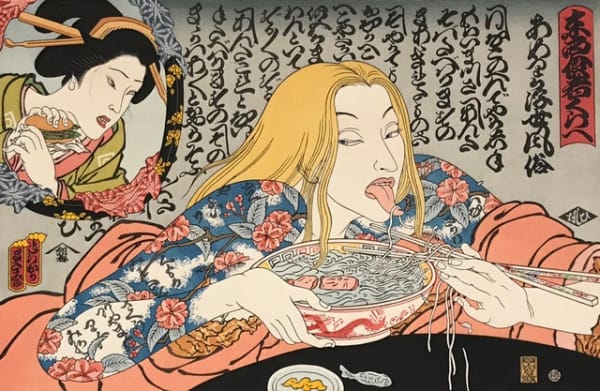
Masami Teroka. New Waves Series/Full Moon Review
Presented in our viewing room is A selection of works by Masami Teraoka 1979-2013, an intimate exhibition that spans Masami Teraoka's career, from early works on paper and woodblock prints to a recent jacquard tapestry based on an original watercolor. Teraoka has consistently subverted traditional imagery with contemporary culture, and will continue to explore the correlated relationship between time, history, and culture in the years to come.
-
January 18, 2013
Four Distinctive Gallery Exhibitions Open This Week
By Alex Bigman on January 16, 2013
A good group exhibition brings the voice of the curator alongside those of the artists. Here are three that promise this and more, plus a special solo show for good measure.
Punch Card, at Catharine Clark Gallery
For this thematically cohesive group show, Catharine Clark Gallery brings together seven artists exploring the art of textile design and tapestry-making as conceptual forebears of the digital world. That is, they are putting the "net" back in networking. The group, which includes Andy Diaz Hope, Laurel Roth, Nina Katchadourian, Devorah Sperber, Stephanie Syjuco and collaborative duo Ligorano/Reese, weave a complex web of cultural and art historical references ranging from Géricault's "The Raft of Medusa," to the Warholian Pop Art grid, to real-time Twitter data.
Punch Card runs from January 19 through February 23 at Catharine Clark Gallery, 150 Minna Street. Opening Reception: Saturday, January 19 from 3 - 5 pm
-
January 03, 2013
Chester Arnold's exhibition A Pilgrim's Progress chosen as SF Gate's "Bay Area arts pick!"

Chester Arnold. "The Legacy of Henry King," 2012; Oil on linen; 56 x 46 inches

Bay Area Arts picks, Dec. 27
Published 3:03 pm, Wednesday, December 26, 2012
MUSIC
San Francisco Chamber Orchestra: Benjamin Simon conducts the orchestra in "Dial M for Music," a program highlighted by the world premiere of Harold Meltzer's Sinfonia Concertante for Violin and Viola. Also on the program are Mozart's work of the same name and Mendelssohn's Sinfonia No. 9 in C. Violinist Scott St. John and violist Sharon Wei are the soloists.
3 p.m. Sunday, Herbst Theatre, 401 Van Ness Ave., S.F. 8 p.m. Monday. First Congregational Church, 2345 Channing Way, Berkeley. 3 p.m. Tuesday. First Palo Alto United Methodist Church, 625 Hamilton Ave. Free. (415) 692-3367. www.sfchamberorchestra.org.ART
Chester Arnold: A Pilgrim's Progress: Think Paul Bunyan before John Bunyan. Despite his show's title, Arnold's darkly comic vision of Gold Rush dead-enders points toward no saving destination. His allegory of lessons never learned evokes the futility of the artistic life, while his paintings in their exuberance make its temptations plain.
11 a.m.-6 p.m. Tuesday-Saturday. Through Jan. 12. Catharine Clark
Gallery, 150 Minna St., S.F. (415) 399-1439
www.cclarkgallery.com.THEATER
Big River: TheatreWorks' fine revival of the Roger Miller musical adaptation of Mark Twain's "The Adventures of Huckleberry Finn" comes to the end of its tuneful run this weekend. James Monroe Iglehart 's Jim anchors Robert Kelley's strong production
8 p.m. Thursday (Dec. 27)-Saturday, 7 p.Sunday, 2 p.m. Saturday-Sunday. Lucie Stern Theatre, 1301 Middlefield Road, Palo Alto. $23-$73. (650) 463-1960. www.theatreworks.org.Brava's New Year's Eve Comedy Fiesta: Marga Gomez rings in the new year headlining a gala comedy blowout with her Funny Lady Friends as a benefit for Brava Theater Center. Featured comics include Aundre the Wonderwoman, Pippi Lovestocking, Lydia Popovich and Eloisa Bravo.
9 p.m. Monday. Brava Theater Center, 2781 24th St., S.F. $30-$50. (415) 641-7657. www.brava.org. -
December 21, 2012
Please join the Catharine Clark Gallery staff for our annual Holiday Party, on Saturday December 22 from 3-5pm!
Walter Robinson. Forest, 2008; MDF, epoxy, metalflake; 84 x 62 x 1 inches
We cordially invite you to the Catharine Clark Gallery’s annual holiday party honoring collectors, patrons, and artists with whom we have had the pleasure of working in 2012.
A Note from Catharine Clark:
It is my pleasure to introduce two people who have joined the gallery’s staff in recent months, Alex Case and Stephanie Smith. Alex is the gallery’s preparator and Stephanie the assistant to the director and in charge of marketing and media relationships. Alex and Stephanie will be joining Juliann Crisp (registrar), Kayleigh Henson (accountant), and me in continuing to develop the artists careers and the relationships with collectors, institutions, art going public and the press.
2012 has been a year of changes: global, political, professional, personal. We welcome most of them, like the re-election of Obama; and are saddened by others, like climate change made more tangible through hurricane Sandy. Our hearts go out to the many people in the arts who have lost artwork, exhibition spaces, studios, archives and exhibition opportunities.
As the year comes to a close and we acknowledge the many changes that it has brought, we want to celebrate the positive role the arts play in building community and sustaining us through good times and bad. We are honored to be working with a strong group of artists, many of whom are looking forward to museum exhibitions in coming months.Chester Arnold
2013 solo exhibition at American University’s Katzen Arts CenterSandow Birk and Elyse Pignolet
Commissioned tile-murals at the new San Francisco Jazz CenterAdam Chapman
Included in the Portraiture Now: Drawing on the Edge exhibition at the Smithsonian National Portrait Gallery, Washington D.C.Timothy Cummings
2013 exhibition at Transarte in Sao Paolo, Brazil; currently in a show at Nancy Hoffman GalleryAnthony Discenza
Included in an exhibition at the San Francisco Museum of Modern Art in 2012, and received the Alumni New Works Award from the Headlands Center for the ArtsAndy Diaz Hope
2012 Artist Fellowship at the de Young Museum with Laurel Roth, where they completed their third, collaborative tapestry Allegory of the Prisoner’s DilemmaUpcoming exhibition at the Bentonville 21c Museum, Bentonville, Arkansas in 2013
Solo show at Aeroplastic, Brussels, Belgium in 2012
Upcoming exhibition at the Nevada Art Museum in 2013
Scott Greene was included in Albuquerque Museum of Art’s exhibition Miniatures & More exhibition in 2012
Charles Gute was acquired by the Twitter Collection in 2012; Boston University’s 808 Gallery included Charles Gute’s work In its show On/Sincerity; Gute will be featured in the Catharine Clark Gallery New York space in March 2013
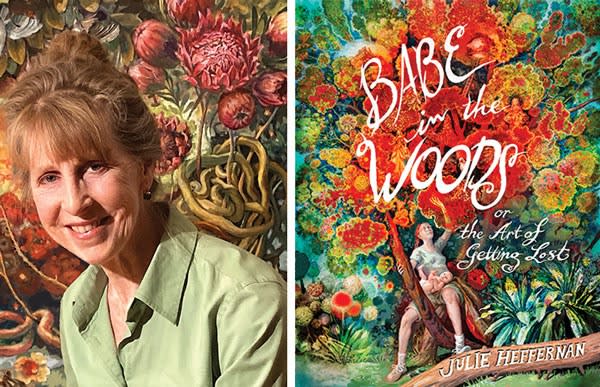
Julie Heffernan was included in a show at the Oklahoma City Museum of Art in 2012; Heffernan’s work is the subject of a traveling show opening at the Palo Alto Art Center in 2013
Nina Katchadourian’s Sorted Books will be released by Chronicle Books in February 2013; Katchadourian had a solo exhibition at the Delaware Art Museum in 2012
Ellen Kooi will be included in the 21c Museum Cincinnati’s exhibition in 2013; Kooi had a solo exhibition at Catharine Clark Gallery in 2012
leonardogillesfleur will also exhibit at the 21c Museum Cincinnati’s inaugural exhibition in 2013
Ligorano/Reese created Morning in America, temporary monuments in Tampa, Florida and Charlotte, North Carolina; Ligorano/Reese also exhibited at the Portland Art Museum in 2012
Kara Maria
Included in exhibition at the San Francisco Museum of Modern Art Artist Galley in 2012; Maria had an exhibition at the Pratt Manhattan Gallery, curated by Eleanor HartneyKambui Olujimi was included in an exhibition at Dodge Gallery and had a solo exhibition at apex art in 2012
Travis Somerville has a forthcoming solo show at the Crocker Art Museum and at Catharine Clark Gallery in March 2013
Stephanie Syjuco was commissioned by the 2012 ZERO1Biennial to create FREE TEXT: The Open Source Reading Room;she was awarded a 2013 Artist in Residency at Recology, San Francisco
Galerie Zidoun in Luxenbourg presented a solo exhibition of Walter Robinson’s work; Robinson showed at the San Jose Museum of Art in 2012
21c Museum Cincinnati will prominently feature Josephine Taylor in their inaugural exhibition OFF-SPRING: New Generations
In 2013, Masami Teraoka will exhibit at the Japan Society, Mori Art Museum, and at the National Portrait Gallery in 2014
Carlos and Jason Sanchez
2012/2013 exhibition at 21c Museum Cincinnati; 2012 Carlos and
Jason Sanchez’ work was acquired by the SF Museum of Modern Art in 2012Lincoln Schatz
Lincoln Schatz piece The Network launched this week at the Smithsonian’s National Portrait Gallery
-
December 07, 2012
Catharine Clark Gallery - Miami Project - Booth 403
Chris Doyle
Nina Katcahdourian
Hello from a bustling Miami! It's been a great first few days of the Miami Project - www.miami-project.com.We opened on Tuesday with 3000-person strong crowds and robust sales. People are really loving the Fair. Feedback from our exhibitors has been equally positive. Things are selling!
In its first edition, this fair has established itself as the premier marketplace for primary market work. We think Greg Kucera said it best, "This is a terrific fair - what you will see for the most part is art by significant artists from all over the globe being offered in the primary market."Our friends at Quint Contemporary Art sold Mel Bochner's "Head Honcho" painting to a U.S. Collector for $78,000 and Fredericks & Freiser sold two large paintings by Brooklyn-based artist, Justin Craun. At Rena Bransten Gallery, Vic Muniz's "Summer in the City, After Edward Hopper", 2011 was acquired by a US Private Collection, and Catharine Clark Gallery sold two pieces by Chris Doyle to 21c and two of Nina Katchadourian's heralded "Seat Assignment" photographs to a private US collector. Greg Kucera Gallery Inc. sold Dan Webb's large carved wood sculpture to an important Swiss collector for $22,000 as well as two paintings by Margie Livingston and two works by Vic Haven. Richard Heller Gallery has been doing well with several artists' works including Devin Troy Strother, whose "30 Something Niggas on Linen" sold on opening night; Marion Peck's "Horsey" which sold to a US collector in the $30,000 range; and David Jien's "Cubby Controller". Forum Gallery sold several works by renowned American realist Robert Cottingham, and Hampton-based gallerist Eric Firestone Gallery reported over $100,000 in sales for Tseng Kwong Chi's photographs from the "Downtown New York" series.
We're getting the VIPs too. Seen in the aisles: the Whitney's Prints and Drawings curator, Carter Foster, Mint Museum director Kathleen Jameson, Des Moines Art Center Curator, Gilbert Vicario, and collector Beth Rudin De Woody. Some famous faces are purchasing as well, including Pop star Usher scooped up Andrew Lewicki's "Louis Vuitton Waffle Maker" from Charlie James Gallery and Sean Diddy Combs bought two gold flag paintings by Andrew Schoultz.
We look forward to seeing you all throughout the weekend. Come find us and say hello - the Fair is located at NE 29th Street and NE 1st Avenue in the heart of Miami.
Miami Project exhibitors:
• ACME. Los Angeles
• Allegra LaViola Gallery New York
• Angles Gallery Los Angeles
• Blythe Projects Los Angeles
• boltax gallery New York
• Brian Gross Fine Art San Francisco
• Carroll and Sons Boston
• Catharine Clark Gallery San Francisco
• CB1 Gallery, LLC Los Angeles
• Charles A. Hartman Fine Art Portland
• Charlie James Gallery Los Angeles
• Cirrus Gallery & Cirrus Edition LTD Los Angeles
• Coagula Curatorial Los Angeles
• Conduit Gallery Dallas
• Cooper Cole Toronto
• Daniel Weinberg Gallery Los Angeles
• David Shelton Gallery Houston
• DC Moore Gallery New York
• DCKT Contemporary New York
• DNA Provincetown
• Eli Ridgway Gallery San Francisco
• Eric Firestone Gallery East Hampton
• FOLEYgallery New York
• • Forum Gallery New York
• Fouladi Projects San Francisco
• Fredericks & Freiser New York
• Gallery 16 San Francisco
• gallery km Los Angeles
• Gallery Paule Anglim San Francisco
• Gary Snyder Gallery New York
• Greg Kucera Seattle
• Gregory Lind Gallery San Francisco
• Haines Gallery San Francisco
• HALSEY MCKAY GALLERY East Hampton
• Inman Gallery Houston
• jack fischer gallery San Francisco
• Jen Bekman Gallery New York
• HALSEY MCKAY GALLERY East Hampton
• Inman Gallery Houston
• jack fischer gallery San Francisco
• Jen Bekman Gallery New York
• Kai Heinze Berlin Berlin
• Kopeikin Gallery Los Angeles
• Larissa Goldston Gallery New York
• lesley heller workspace New York
• Mark Borghi Fine Art New York
• • Marty Walker Gallery Dallas
• Marx & Zavattero San Francisco
• Morgan Lehman New York
• Muriel Guepin Gallery Brooklyn
• NOMA Gallery San Francisco
• Patricia Sweetow Gallery San Francisco
• PDX CONTEMPORARY ART Portland
• Pentimenti Gallery Philadelphia
• Peter Mendenhall Gallery Los Angeles
• Platform Gallery Seattle
• Quint Contemporary Art La Jolla
• Rena Bransten Gallery San Francisco
• RH Gallery New York
• Richard Heller Gallery Los Angeles
• Richard Levy Gallery Albuquerque
• Romer Young Gallery San Francisco
• Steven Zevitas Gallery Boston
• The New Wall Gallery Mexico
• Traywick Contemporary Berkeley
• Visual Arts Gallery/SVA New York
• Walter Maciel Gallery Los Angeles
• William Campbell Contemporary Fort Worth
• ZieherSmith New York
• 101/Exhibit Miami / Los AngelesFAIR HOURS
• Tuesday, Dec. 4th: 5:30PM - 10:00PM
Miami Project Preview
• Wednesday, Dec. 5th: 11:00AM - 5:00PM
• Thursday, Dec. 6th: 11:00AM - 7:00PM
Private MOCA Event - 7:00PM - 10:00PM •
Friday, Dec. 7th: 11:00AM - 8:30PM
• Saturday, Dec. 8th: 11:00AM - 7:00PM
• Sunday, Dec. 9th: 11:00AM - 6:00PMWe look forward to seeing you!
-
December 06, 2012
Please join Catharine Clark Gallery at the Miami Project Art Fair in Booth #403!
Art Fair: Miami Project
December 4-9, 2012
Miami's Midtown / Wynwood Art DistrictIn Booth 403, Catharine Clark Gallery will present solo exhibitions by Chris Doyle and Nina Katchadourian. Click here to download your complimentary VIP Pass to the Miami Project. We look forward to seeing you there!
Miami Project Fair Hours
• Tuesday, Dec. 4th: 5:30PM - 10:00PM Miami Project Preview
• Wednesday, Dec. 5th: 11:00AM - 5:00PM
• Thursday, Dec. 6th: 11:00AM - 7:00PM
• Friday, Dec. 7th: 11:00AM - 8:30PM
• Saturday, Dec. 8th: 11:00AM - 7:00PM
• Sunday, Dec. 9th: 11:00AM - 6:00PMLearn more about the Miami Project
-
November 27, 2012
Pre-order Nina Katchadourian's Sorted Books before its release in February 2013 by Chronicle Books.
Sorted Books
By Nina Katchadourian, Introduction by Brian Dillon
8 x 6 in, in; 176 pp, 80 full-color photographs pp;
Hardcover
Published in February, 2013
ISBN 9781452113296
ISBN10 1452113297
Release date: February 2013
$ 25 -
November 24, 2012
Chester Arnold reviewed by Kenneth Baker in the San Francisco Chronicle, November 24, 2012
-
October 29, 2012
Join us for the opening reception of Chester Arnold: A Pilgrim's Progress on Saturday, November 3, 3-5pm
-
September 15, 2012
Ed Osborn "Night-Sea Music" on view at SFMOMA
Ed Osborn, Night-Sea Music, 1998; installation; mixed media, electronics, and sound, dimensions variable; Collection SFMOMA, Society for the Encouragement of Contemporary Art Fund purchase; © Ed Osborn
Collection View: Night-Sea Music
September 1 - November 4, 2012
San Francisco Museum of Modern Art
151 Third Street (between Mission + Howard)
San Francisco CA 94103
-
September 04, 2012
Ligorano/Reese (Nora Ligorano and Marshall Reese)
Middle Class Ice Sculpture will Melt down at the Democratic National Convention
View livestream of the ice sculpture here: http://bit.ly/MH1qe8

Charlotte: Marshall Park, Tuesday, September 4, 2012 / 11:30AM-3 PM – optimum viewing time
A large ice sculpture of the words Middle Class will melt today at the Democratic National Convention in Charlotte, N.C. The work is by artists Nora Ligorano and Marshall Reese. The sculpture they will install weighs over 2,000 pounds and measure 15 feet wide. Individual letters are 4 feet tall. Watch the livestream of the ice sculpture here: http://bit.ly/MH1qe8
Last week, the first public performance of this piece was held at the Republican National Convention.
The artists call these sculptures “temporary monuments.” After unveiling them, Ligorano and Reese let them melt away and film their disappearance, which can take anywhere from 6 to 24 hours. The dates for the conventions, “do not bode well,” Reese says, “for the sculptures’ survival.” “They may disappear,” Ligorano adds, “even faster than usual. It’s a tossup whether, that’s due to economic or climatic conditions.”
As the sculptures disintegrate, the artists document their destruction, creating still and moving images of broken words and letters. Ligorano and Reese launched a dedicated website www.meltedaway.com, to which they will upload stills and video clips throughout the event with written commentary. “We see the website as a new type of documentary form,” Ligorano says, “incorporating words, still images and video.”
This is the third public ice sculpture Ligorano/Reese have done. In 2008 they installed ice sculptures of the word Democracy at the conventions in Denver and St. Paul. On the 79th anniversary of the Great Depression, the same year, they melted down the word Economy on Foley Square, New York City, in front of the NY State Supreme Court building.
The artists are naming this year’s installations at the conventions after Ronald Reagan’s 1984 campaign. “’Morning in America,’” Reese says, “was a brilliant soft-sell advertising pitch with images of Americana almost as if Norman Rockwell had drawn the storyboards. 30 years later, one wonders if it really was the dawning or a new age or more like an eclipse into darker times. Certainly the Middle Class hasn’t fared well during that time.”
Follow @melted_away on Twitter for the latest updates on the sculptures.
LIGORANO/REESENora Ligorano and Marshall Reese have collaborated as Ligorano/Reese since the early 80's. Their artwork examines contemporary trends in society and the media through the manipulation of images and sound from print, television, the Internet, and radio. Their installations, limited edition multiples and artists books have been exhibited at Jim Kempner Fine Art, Kent Gallery, the Beall Center, the Cleveland Museum of Art, The Portland Art Museum, Museum fur Angewandte Kunst (MAK) in Frankfurt, Germany, MIT MediaLab, Museum of Arts & Design, the New York Public Library, San Jose Institute of Contemporary Art, the Neuberger Museum of Art, and Lincoln Center. They have received fellowships and funding from the Jerome Foundation, The Puffin Foundation, NYFA, NYSCA, the NEA, Art Matters and have been artists in residence at the MacDowell Colony, Montalvo Arts Center, and Djerassi Resident Artists Program. They are represented by Catherine Clark Gallery and Jim Kempner Fine Art.
-
July 27, 2012
Please note that Catharine Clark Gallery is open in August!
We will be open to the public through August 25 and by appointment August 26 - September 1.
Join us September 8 for the opening reception of the solo exhibition of artist Chris Doyle.
-
July 17, 2012
Group exhibition opens this Saturday
Reception Saturday, July 21, 4-6pm with remarks at 5pm
Group Exhibition of Alumni of the Artist in Residence Program at Recology San FranciscoWorks by Donna Anderson Kam, Terry Berlier, Lauren DiCioccio, Barbara Holmes, Scott Kildall, and Abel Rodriguez
Media Room: Lynn Marie Kirby in collaboration with public school student Bartek Rost and SFartsED/International Orange: The Bridge Re-Imagined
July 21, 2012 – August 25, 2012
-
July 03, 2012
Stephanie Syjuco: Artist Talk at di Rosa, presented with KQED Education
Thursday, July 12 at 7:00 PM
KQED Education and di Rosa come together to celebrate artists from the di Rosa collection that have also been featured on KQED’s popular art series Spark. The lectures are free for educators; $5 for di Rosa Members; $10 General. To reserve a seat call 707.226.5991 x27. For more information, visit http://www.dirosaart.org/category/events-upcoming/.
San Francisco-based conceptual artist Stephanie Syjuco believes that politically engaged art can also be fun. Often dealing with issues of globalization and outsourcing, Syjuco's work intersects with some of the most heated debates of the 21st century but does so in a ways that are often surprising and playful.
For the 75th anniversary of the Golden Gate Bridge, Syjuco created an expansive shop of souvenirs produced in a monochrome palette: the memorable orange hue of the Golden Gate Bridge. Working with the same paint used to keep the bridge looking fresh, Syjuco's installation features all things reddish-orange: teacups, jewelry, postcards and tchotchkes that are surprisingly not for sale, but presented together as a conceptual art installation.
Teachers can join KQED Education staff for a free arts and media workshop focused on Syjuco’s work from 5:30-6:30 before the lecture. To register for the workshop, send an email to: ArtsEd@KQED.org. -
June 27, 2012
This Friday, 5-8pm: de Young Reception for Andy Diaz Hope and Laurel Roth
Andy Diaz Hope and Laurel Roth - de Young Artist Fellows
For more info, go to http://eepurl.com/m-YvL
-
June 20, 2012
Walter Robinson's mixed media composition, Image Not Available is now available as a limited edition T-shirt.
It will premier Saturday, June 23rd, at Sequoia Tees--an online gallery of limited edition art T-shirts designed by artists. To see the shirt, visit the link beginning this Saturday: http://sequoiatees.com/ -
June 16, 2012
Catharine Clark Gallery presents a solo exhibition of photography by Ellen Kooi and in the Media Room is Lauren Kelley’s single-channel video, "Upside" - http://eepurl.com/mM3j1
-
May 22, 2012
Due to its overwhelming popularity, Nina Katchadourian's solo exhibition Seat Assignment has been extended through June 9th, 2012.
In addition to dozens of online press, including The New Yorker, Huffington Post, Rachel Maddow, KQED, Daily Serving, Daily Mail, MSN, Boing Boing, The Guardian (UK), and others, the series had been reviewed in the San Francisco Chronicle, The Art Newspaper, and other papers.
For images and more information, visit the exhibition page.

-
May 15, 2012
Join us this week, May 17–20, for artMRKT San Francisco, the Bay Area contemporary and modern art fair held at the Concourse Exhibition Center in San Francisco’s SOMA Design District. The gallery will present works in painting, sculpture, drawing, photography, and new media. Register for your Complimentary VIP Passes, courtesy of Catharine Clark Gallery, at www.art-mrkt.com/sf/tickets/clark.
artMRKT San Francisco 2012
Catharine Clark Gallery
BOOTH 401
Concourse Exhibition Center
620 7th Street at Brannan
San Francisco, CAVIP Reception Hours:
Thur, May 17, 6-8pm
Opening Night Benefit Preview Reception
(Preview ticket purchase required)
Thur, May 17, 8-10pm
Opening Night Party
(VIP Pass required)
Regular Fair Hours:
Fri, May 18, 11-7pm
Sat, May 19, 11-7pm
Sun, May 20, Noon-6pm -
May 09, 2012
Join San Francisco Art Institute for a conversation with art critic Roberta Smith and SFAI President Charles Desmarais this Friday, May 11, 4-5pm, hosted at Catharine Clark Gallery.
http://www.sfai.edu/event/ny-times-critic-roberta-smith-conversation-charles-desmarais
-
April 25, 2012
Our Email is Back Online!
Catharine Clark Gallery was temporarily experiencing some technical issues with our email server.
If you sent an email to anyone at the gallery between Saturday (4/21) and Tuesday (4/24), we likely did not receive it, so please re-send.
Even though the server is back online, some of you may continue to receive bounce messages. If you are concerned that we did not receive your email, you can call the gallery Tuesday through Saturday at 415-399-1439.
Thank you for your patience while we worked out the bugs!
-
April 23, 2012
Catharine Clark Gallery is temporarily experiencing some techical issues with our email server. Please excuse us while we work out the bugs. If you have an urgent need, please contact Catharine Clark at 415-519-1439 or call the gallery Tuesday through Saturday at 415-399-1439. Thank you for your patience.
-
April 21, 2012
Welcome to the new Catharine Clark Gallery website. Re-designed by local team MacFadden & Thorpe to coincide with the gallery's 21st Anniversary exhibition and celebration. Keep checking in as we add new content each week!
-
February 18, 2012
Catharine Clark Gallery’s 21st Anniversary is featured on VisitYerbaBuena.org
www.visityerbabuena.org -
February 18, 2012
Walter Robinson will have a solo exhibition at Galerie Zidoun in Luxumborg from March 1st to April 21st 2012
www.galeriezidoun.com